




CNCBT Academy

About CNCBT

Cardio-Neuro-Cognitive-Behavioral Technique (CNCBT)

Cardio-Neuro-Cognitive-Behavioral Technique (CNCBT) is a structured, self-directed behavioral training method designed to help individuals intentionally reshape emotional responses and habits through the combined use of cardiovascular exertion and cognitive-behavioral learning principles.

CNCBT operates on a simple but often overlooked reality:
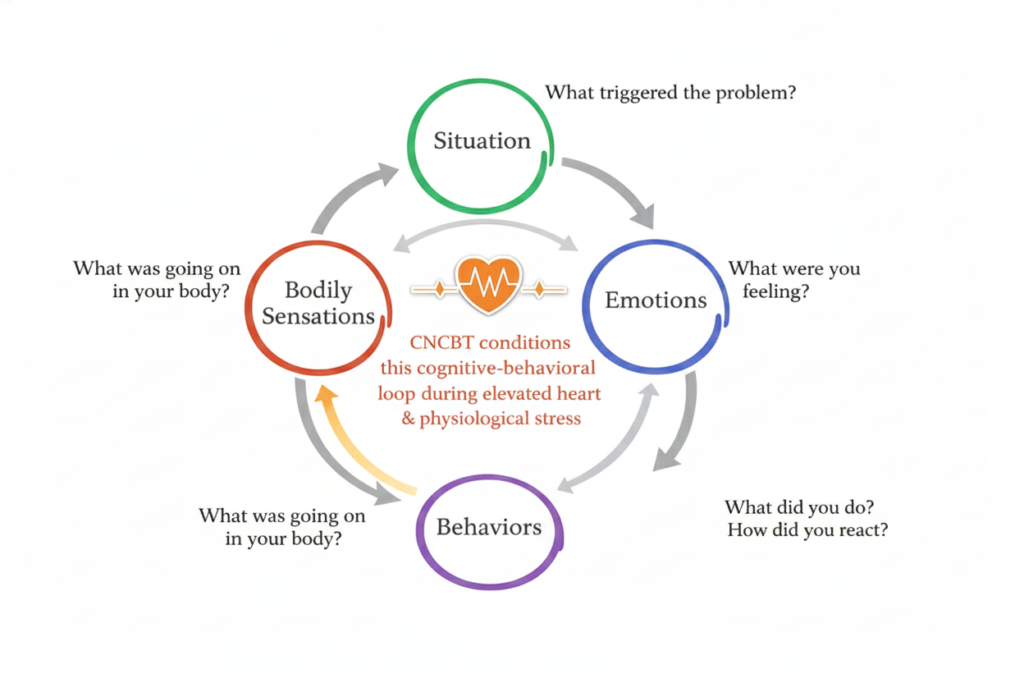
most emotional dysregulation does not occur in calm conditions. Anger, panic, anxiety, impulsivity, shutdown, and avoidance typically emerge when the nervous system is already activated. CNCBT places learning directly inside that activated state. Unlike conventional approaches that rely primarily on insight, discussion, or reflection, CNCBT emphasizes embodied learning—training emotional regulation skills while the heart rate is elevated, breathing is rapid, muscles are fatigued, and internal resistance is present.

Bridging Emotional Insight and Real-World Action

CNCBT is not psychotherapy, not a diagnostic tool, and not a licensed mental health treatment. It is a behavioral skill-building technique intended to complement not replace professional care where appropriate.

Knowing what to do emotionally does not guarantee being able to do it when it matters. Many people intellectually understand emotional regulation strategies, yet find themselves reverting to old patterns during moments of stress. CNCBT was created to address this gap between cognitive understanding and behavioral execution.

Knowing what to do emotionally does not guarantee being able to do it when it matters. Many people intellectually understand emotional regulation strategies, yet find themselves reverting to old patterns during moments of stress. CNCBT was created to address this gap between cognitive understanding and behavioral execution.

How CNCBT Differs from Traditional CBT

Traditional Cognitive-Behavioral Therapy (CBT) is typically conducted in low-arousal environments seated sessions, reflective dialogue, worksheets, and imagined scenarios. These methods are effective for insight and awareness, but they may not fully prepare individuals for high-arousal emotional moments. CNCBT differs in three critical ways:

Context of Learning

Skills are practiced during cardiovascular exertion, not in stillness. This places learning inside physiological stress rather than outside it.

State-Dependent Encoding

Emotional regulation skills learned during nervous system activation become more accessible in real-world emotional situations.

Automaticity Over Insight

CNCBT prioritizes behavioral automaticity what the body and brain do under pressure over intellectual understanding alone.

The Neuro Component of CNCBT and Learning Under Stress

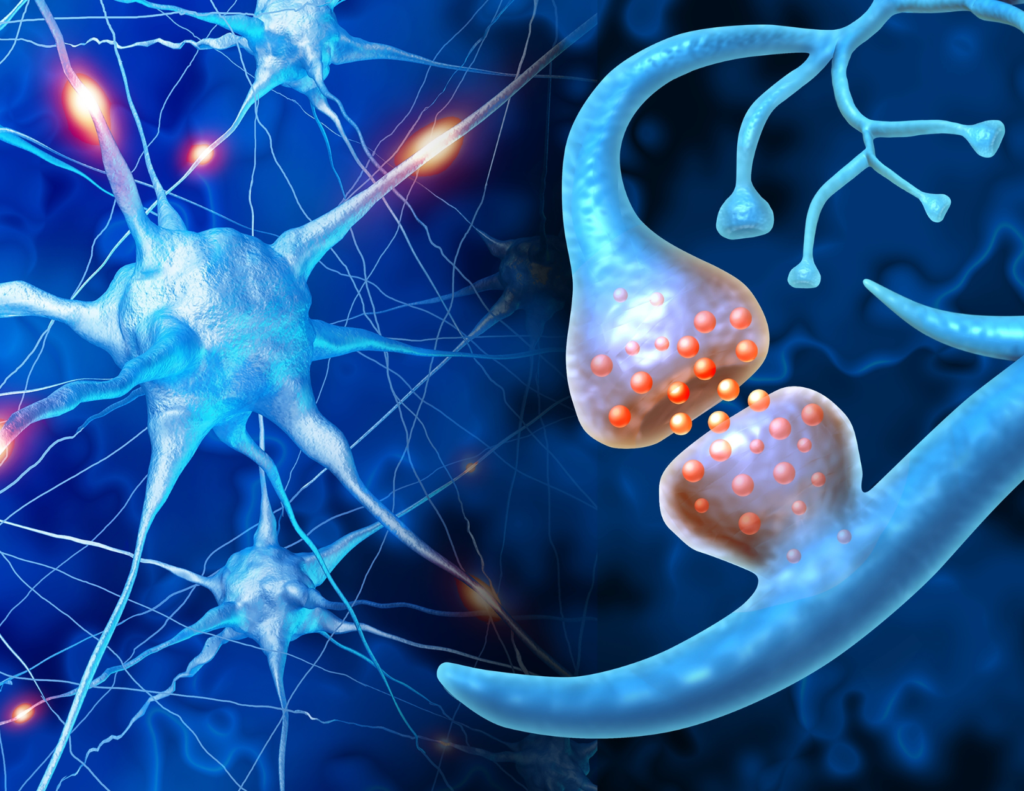
The “Neuro” in CNCBT refers to neuroplasticity, the brain’s capacity to reorganize itself through experience and repetition. When new behaviors are learned:

These changes occur at cellular and molecular levels, strengthening the neural pathways associated with trained behaviors. Learning that occurs during heightened arousal physical or emotional has been shown to enhance memory consolidation and retrieval. CNCBT intentionally exploits this principle by pairing cardiovascular exertion with focused cognitive-behavioral rehearsal. In short, CNCBT does not merely teach emotional regulation it conditions it neurologically.

Get Online Courses

Access expert-led CNCBT modules and master the AARV(4) techniques at your own pace. Transform your mental well-being with evidence-based tools for lasting change.

The AARV(4) Emotional Regulation Model

At the heart of CNCBT is AARV(4), a four-step skill sequence that guides individuals through awareness, acceptance, physiological calming, and emotional validation to promote healthier internal and interpersonal responses.

Awarness

Develop the ability to notice thoughts, emotions, and bodily sensations in real time without judgment or avoidance.

Acceptance

Learn to allow emotional experiences to exist without suppressing, denying, or reacting impulsively to them.

Relaxation

Use techniques like breathing, movement, and nervous-system calming strategies to reduce physiological arousal.

Validation

Apply structured validation to acknowledge emotional experience, normalize responses, and support constructive action.

Where Emotional Regulation Becomes Executable

CNCBT is informed by established psychological research, particularly principles found in cognitive-behavioral and emotion regulation approaches, and is presented as an integrative, skills-based framework that combines physiological regulation, cognitive strategies, and behavioral skills to support emotional self-management.

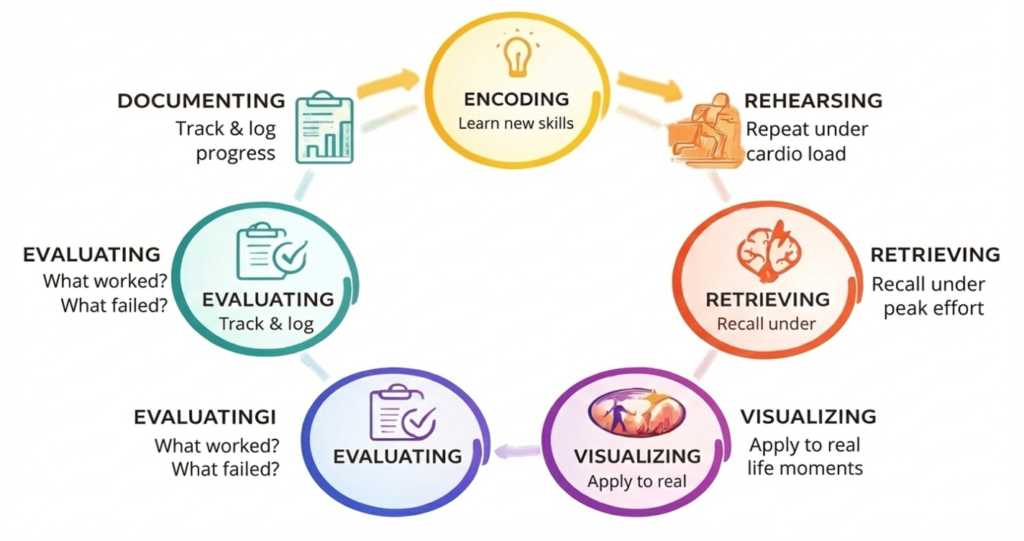
What distinguishes CNCBT is its emphasis on training these skills under conditions of physiological activation, where emotional responses are most likely to break down. By practicing regulation strategies during cardiovascular exertion, CNCBT strengthens the ability to access and apply these skills in real-world, high-stress situations.

Rather than focusing solely on insight or awareness, CNCBT prioritizes skill execution, repetition, and retrieval under pressure, supporting durable and transferable emotional regulation over time.

The Purpose of CNCBT

CNCBT is not emotional suppression it is emotional mastery. Rather than attempting to eliminate difficult emotions, CNCBT trains individuals to respond to them with clarity, regulation, and intention. By conditioning the nervous system, cognition, and behavior simultaneously, CNCBT transforms emotional reactivity into skill-based, deliberate response. Emotional regulation becomes something that can be executed reliably under pressure, not just understood in theory.

Greater Emotional Clarity

Improved ability to recognize emotional states, triggers, and bodily signals with accuracy, reducing confusion and emotional overwhelm.

Consistent Self-Regulation

The capacity to apply emotional regulation skills reliably across situations, even during heightened stress or physiological activation.

Resilience Under Pressure

Strengthened tolerance for discomfort and stress, allowing composed, intentional responses instead of reactive or impulsive behavior.

Evidence-Based Emotional Regulation

Take the First Step
Toward Emotional Mastery

Whether you’re exploring CNCBT for personal growth or professional development, begin your journey toward greater emotional control, clarity, and resilience today.